|
|
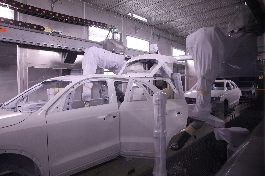
Passenger vehicle coating serves as a core process in automobile manufacturing. It not only delivers diverse visual appearances for vehicles, but also provides effective protection for the vehicle body’s metal structure, extending the overall service life of automobiles. As an industrial technology integrating fine chemical engineering, material application and automatic control, passenger vehicle coating adopts multi-layer composite coatings to meet the multiple requirements of protective performance, decorative effect and green production.
I. Functional Division of Multi-Layer Composite CoatingsThe original factory coating of passenger vehicles consists of multiple functional coating layers. Each layer performs its unique function and jointly forms a complete vehicle body protection system. Electrophoretic Layer (Primer): Basic Protective LayerAs the first coating formed after vehicle body pretreatment, the electrophoretic coating uniformly covers the internal and external surfaces of the body steel plate, welds and cavity areas that are difficult to reach by conventional spraying through electrophoretic technology. It forms a continuous protective film on the steel surface, isolating water vapor and oxygen from direct contact with metal and reducing the risk of body corrosion, which is an essential part of the overall vehicle anti-corrosion design. Intermediate Coating: Transition LayerSprayed on top of the electrophoretic layer, the intermediate coating mainly fills tiny textures of the primer layer and provides a flat base for the subsequent topcoat. Meanwhile, it features excellent impact resistance, buffering the impact of gravel splashed during driving, preventing direct external damage to the steel plate, and avoiding adverse chemical reactions between different coating layers. Basecoat: Color Presentation LayerThe basecoat is the core layer that determines the vehicle’s exterior color, including solid color paint, metallic paint and pearlescent paint. Metallic and pearlescent paints contain aluminum powder or mica particles, presenting layered visual effects under light irradiation. The formula of the basecoat balances color uniformity and weather resistance, effectively reducing fading caused by long-term outdoor exposure. Clear Coat: Surface Protective LayerAs a transparent coating covering the basecoat surface, the clear coat improves paint gloss and delivers a delicate visual texture. It blocks ultraviolet rays to slow down the oxidation and discoloration of the basecoat, and resists erosion from acid rain, bird droppings, tree gum and other common outdoor pollutants. It also minimizes fine scratches generated during daily vehicle use. II. Conventional Process FlowModern passenger vehicle coating is completed in enclosed clean workshops with stable environmental control to ensure coating quality. The standard process includes the following procedures: PretreatmentThrough degreasing, water washing, surface conditioning and phosphating, residual oil and impurities on the vehicle body are thoroughly removed. A uniform conversion film is formed on the steel surface to enhance the adhesion performance of subsequent coatings. Electrophoretic CoatingThe pretreated vehicle body is fully immersed in an electrophoresis tank. Under the action of an electric field, the coating adheres evenly to the body surface, followed by high-temperature baking and curing in professional drying equipment. Intermediate and Topcoat SprayingAutomatic spraying equipment is applied to control the coating thickness within a reasonable range. The industry widely adopts the "three-coat one-bake" process or water-based primer-free process. Multiple layers of coatings are sprayed continuously in a wet film state and cured at high temperature uniformly, which reduces energy consumption and volatile organic compound (VOC) emissions during production. Final InspectionAfter complete coating curing, manual and equipment integrated inspection is carried out to check the paint surface appearance, eliminate visible defects and ensure uniform and high-quality finished paint surfaces. III. Mainstream Industry Development TrendsDriven by increasingly stringent green production standards, passenger vehicle coating technology is continuously optimized toward low emission and low energy consumption: Wide Application of Water-Based CoatingsUsing water as the main diluent, water-based coatings significantly reduce VOC emissions during production and have become the mainstream development trend in the industry. Promotion of Low-Temperature Curing TechnologyIterative upgrading of new coating formulas enables partial coatings to be cured at lower temperatures, greatly reducing energy consumption in the drying process. Digital and Automatic UpgradingIntelligent control systems adjust spraying parameters in real time, cooperating with visual inspection equipment to complete paint quality screening. This improves coating utilization efficiency and reduces material waste. Expansion of Personalized CoatingInnovative digital printing spraying technology has been gradually applied, supporting small-batch customized exterior coating and meeting diversified personalized appearance needs of end users. |